New Release · Cybersecurity & AI Governance
Securing the AI Frontier
Because most AI security books are written for people who already know the answers.
eBook
Paperback
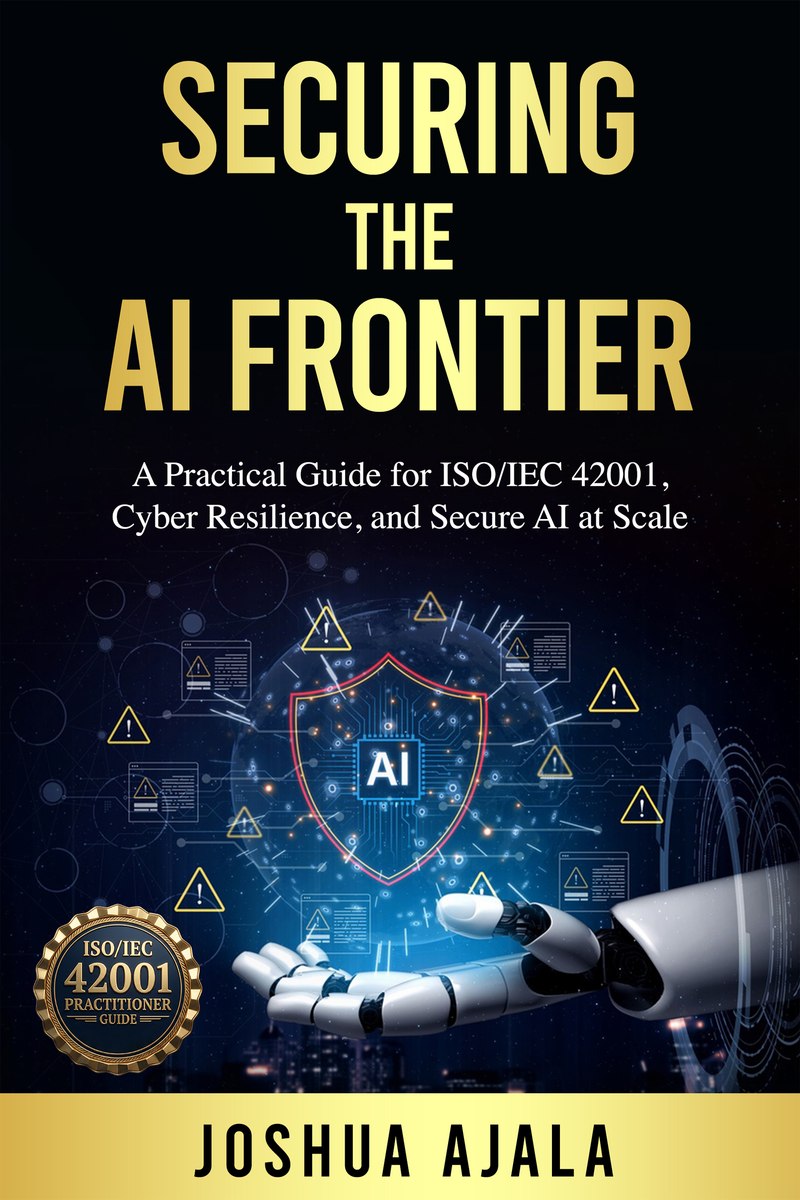
Because most AI security books are written for people who already know the answers.
I spent years watching organisations rush AI into production and then panic when the governance questions came up. Nobody had a clear answer. That's why I wrote this. Not as a checklist guide, as something you can actually use when you're sitting across from a board that wants to know you've got this under control.
It covers ISO/IEC 42001, AI security controls, and how to make the governance conversation land at executive level. The goal isn't compliance for its own sake. It's building something that holds up, in practice, under pressure, and under audit.
Key themes covered in the book:
Not just what ISO 42001 says, but how to implement it in a real organisation, with real constraints.
Most governance conversations die in a slide deck. This chapter is about making them stick.
Prompt injection, model risk, data exposure. The attacks that are already happening, and the controls that help.
Compliance doesn't have to be a cost centre. There's a way to make this work for you commercially.
What works when you're managing AI at scale, and what breaks first when you don't.
Everything in here comes from real work. Not case studies. Not simulations.
There's no shortage of books that list the ISO 42001 clauses. I've read most of them. What was missing was something that connected the standard to the actual attack surface, the actual boardroom conversation, and the actual budget question. Securing the AI Frontier tries to do all three. Attack vectors, ISO 42001 and 27001 integration, SOC operations, agentic AI, and how to make the financial case for doing this properly. Written from experience, not from a lecture hall.

Joshua Ajala is an IT consultant. He's been working in cybersecurity, cloud, and AI governance for over fifteen years. He holds ISO 42001 Lead Implementer, ISO 27001 Lead Auditor, and CISM certifications. In 2026 he was named a Computing Top 100 IT Leader, something he still finds surprising, honestly.
He wrote this book for the same reason he started in this field: because someone helped him get there, and he'd rather pay that forward than keep the knowledge to himself.
Get the book. Work through it. Build something that actually holds up when it matters.
Buy Now on AmazonA self-paced course structured around the five Parts of Securing the AI Frontier, with a knowledge check after each module.